


As AI reshapes cloud economics, FinOps is rapidly evolving beyond reporting, visibility, and observability into a broader financial control discipline for cloud, SaaS, and AI operations.
Enterprises are now facing increasingly dynamic consumption patterns, token-based pricing volatility, architecture-driven financial decisions, and emerging autonomous execution models. These changes are placing new pressure on FinOps, IT, finance, engineering, and AI operations teams to move from post-event reporting toward real-time control, governance, and decision intelligence.
Ahead of FinOps X 2026, Surveil announced expanded engagement with the FinOps ecosystem through its sponsorship of FinOps X, broader community co-development initiatives, and new early access programs for FinOps Foundation community members new to Surveil.
The announcement reflects a larger industry shift. Traditional cloud financial management approaches were designed to explain infrastructure spend after the fact. Today, organizations are increasingly looking for operational and financial intelligence that can help guide decisions before cost volatility, inefficient resource allocation, and uncontrolled AI consumption impact business outcomes.
As AI adoption accelerates across cloud infrastructure, SaaS applications, enterprise productivity platforms, models, and autonomous agents, financial accountability is becoming more complex. Enterprises must now balance innovation, governance, optimization, forecasting, and operational control across rapidly evolving technology environments.
According to Gartner, organizations that fail to implement operational controls around autonomous AI systems risk persistent cost volatility even when mature FinOps practices already exist. AI-driven operating models are changing how organizations think about cost governance, accountability, and operational decision-making.
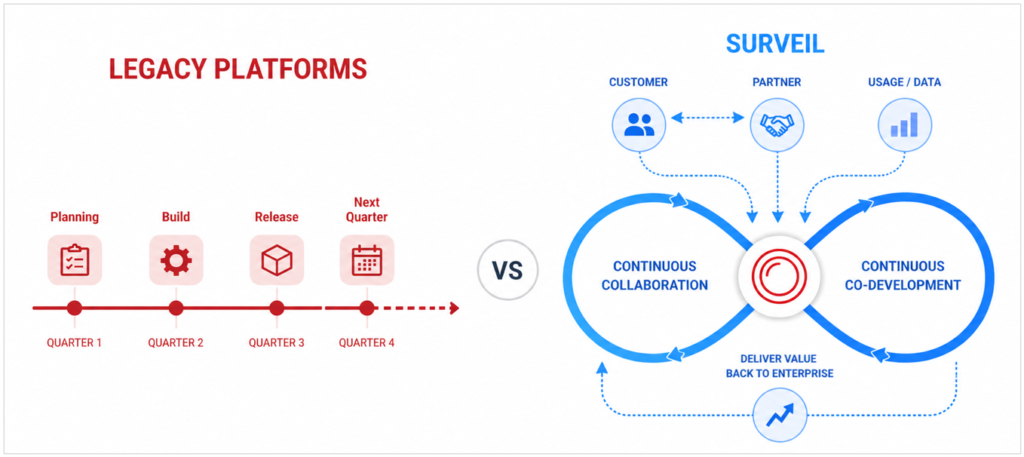
Over the past 12 months, Surveil has been co-developing with the FinOps Foundation community using practitioner insight, operational workflows, and real-time enterprise data to help shape capabilities aligned to the next evolution of FinOps priorities, operating needs, and business outcomes. This collaboration has guided platform innovation across cost allocation, forecasting, optimization, governance, SaaS financial management, AI financial accountability, and emerging operational control requirements for AI-driven environments.
As part of its FinOps X sponsorship, Surveil is expanding access to its community co-development and early access initiatives, giving FinOps Foundation community members new to Surveil the opportunity to help shape emerging capabilities focused on AI economics, governance, and financial control.
Built for enterprise scale, Surveil helps organizations unify financial and operational intelligence across Microsoft, AWS, multi-cloud, SaaS, and AI environments. By connecting financial intelligence, operational context, and governance capabilities, Surveil enables enterprises to move from fragmented reporting toward continuous financial control across the modern technology estate.
The company’s broader strategy reflects a growing market shift toward operational financial governance, where cloud, SaaS, AI, and autonomous systems increasingly converge into a shared enterprise control layer. As organizations scale AI adoption, Surveil continues investing in helping enterprises strengthen accountability, governance, and decision intelligence across rapidly evolving cloud and AI operating models.
Read the official announcement:
Surveil Expands Real-Time Co-Development with the FinOps Community as AI Reshapes Cloud Economics